Waymo Launches Generative 3D World Mannequin to Prepare Self-Driving Vehicles
What’s the story?
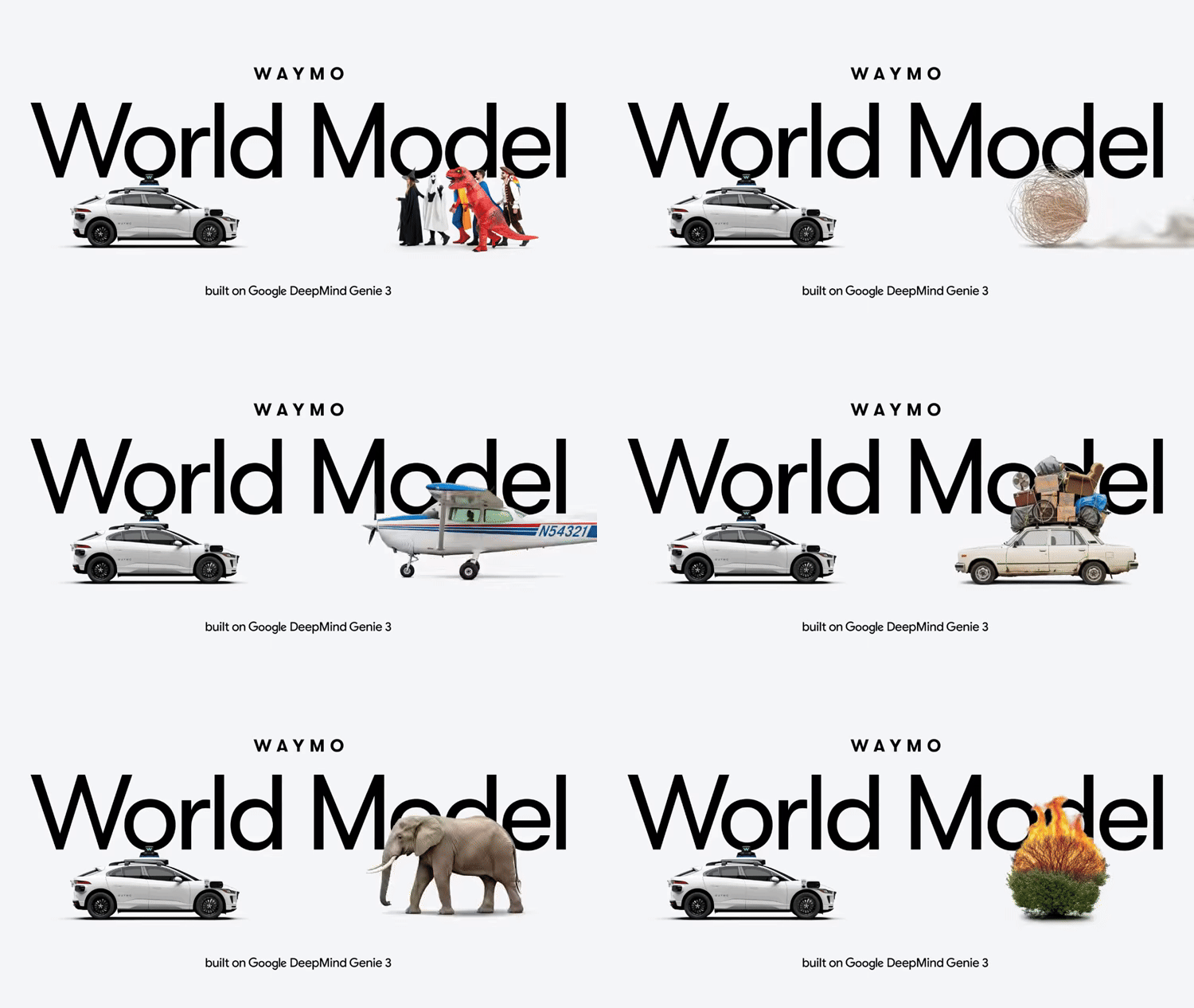
Waymo has introduced the Waymo World Mannequin, a generative device constructed on Google DeepMind expertise to create photorealistic 3D simulation environments for autonomous automobile coaching.
Why it issues
By producing 3D simulations of safety-critical incidents, Waymo can consider how its autonomous system responds to advanced challenges which can be tough to seize in the actual world.
The larger image
Waymo’s adoption of generative AI architectures illustrates how spatial computing and 3D modeling have gotten central to the event and security validation of autonomous autos.
February 12, 2026 – Autonomous driving expertise firm Waymo has just lately introduced the introduction of the Waymo World Mannequin, a generative mannequin designed to create large-scale, hyper-realistic 3D simulations for coaching and testing its Waymo Driver system.
Waymo acknowledged that the mannequin is constructed upon Genie 3, a complicated general-purpose world mannequin developed by Google DeepMind that generates photorealistic and interactive 3D environments. Waymo has tailored the expertise for the driving area to generate high-fidelity, multi-sensor outputs, together with each digital camera and lidar knowledge.
Coaching Autonomous Autos on Digital Encounters with Elephants
Based on the corporate, most simulation fashions within the autonomous driving business are educated from scratch based mostly solely on knowledge collected on-road. This strategy signifies that techniques can solely study from restricted expertise.
Nevertheless, with Genie 3’s world information, which itself was gained from pre-training on a particularly giant and numerous set of movies, Waymo is ready to discover conditions that had been by no means immediately noticed by the corporate’s fleet. The Waymo World Mannequin is ready to generate nearly any scene, from common, day-to-day driving to uncommon, long-tail situations, throughout a number of sensor modalities. This might embody encounters with numerous wildlife, excessive climate occasions, pure disasters, in addition to uncommon and safety-critical occasions.
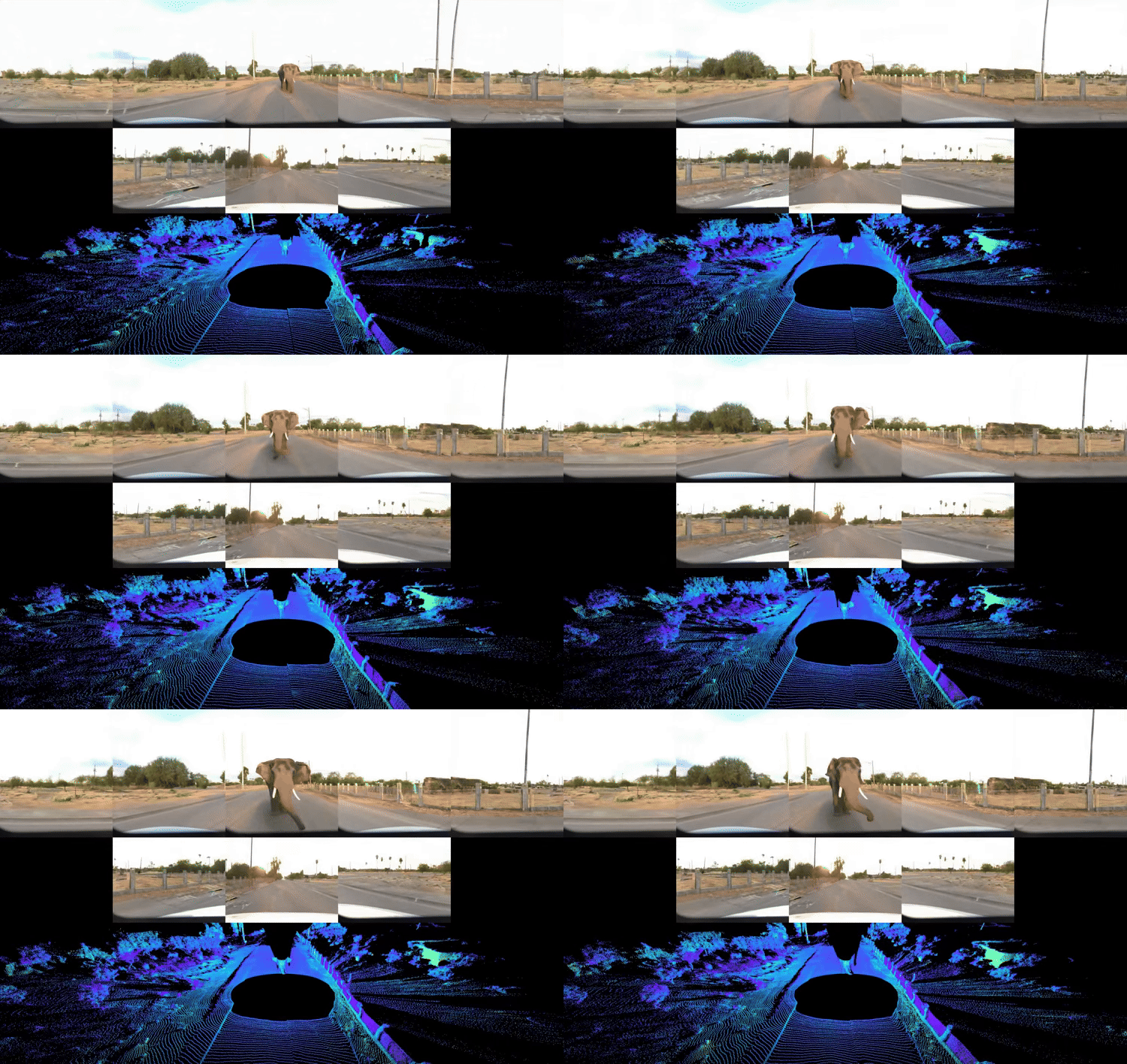
To study from this data, the Waymo World Mannequin makes use of specialised post-training to switch world information from 2D video into 3D lidar outputs. The system is even in a position to generate 4D level clouds, offering helpful exact depth alerts.
The system offers three fundamental mechanisms for simulation management:
Driving motion management permits for a responsive simulator that adheres to particular driving inputs.
Scene format management permits for personalisation of street layouts, visitors sign states, and the habits of different street customers.
Language management is essentially the most versatile device, enabling changes to time-of-day and climate circumstances, and even the era of solely artificial scenes.
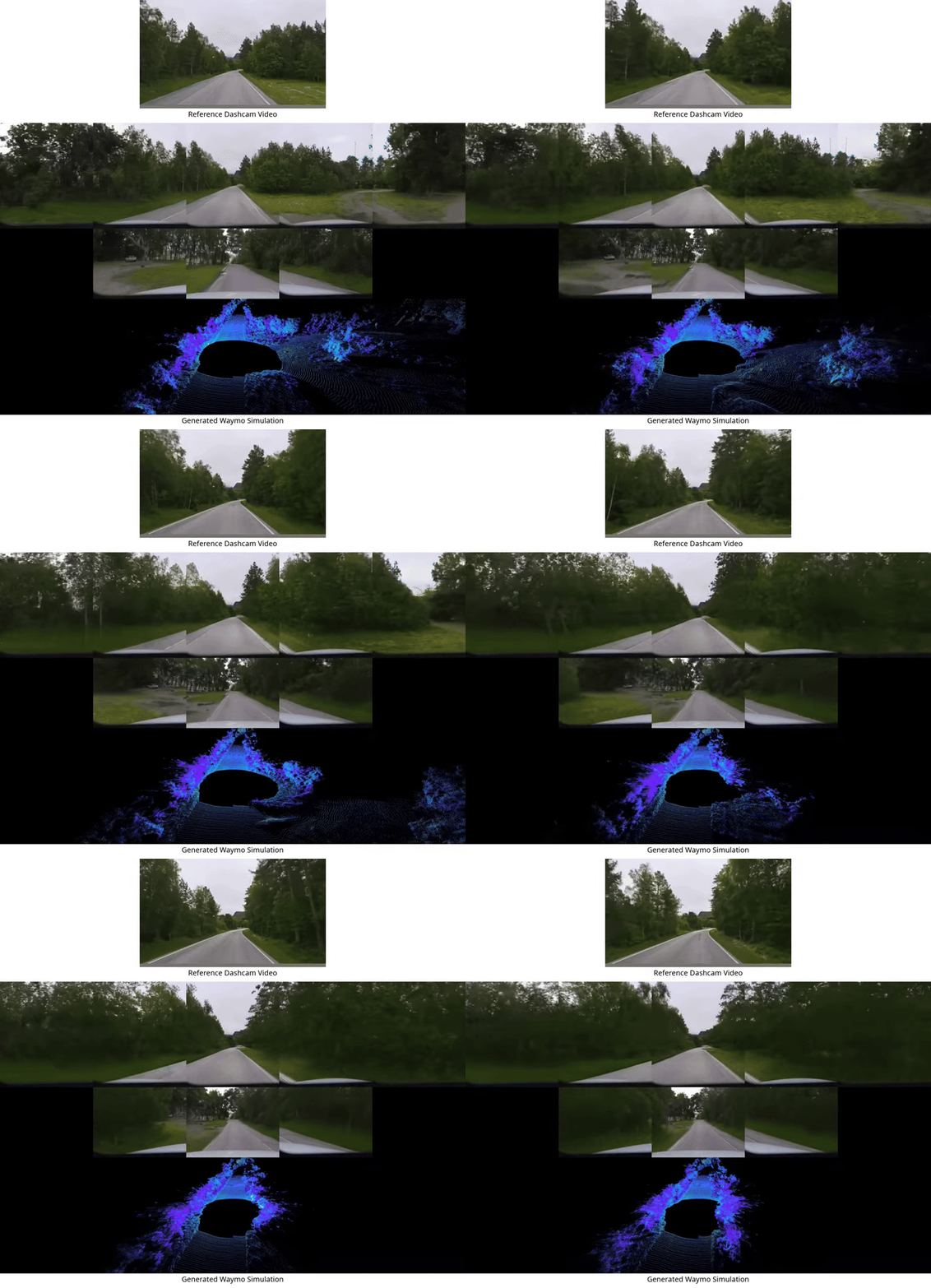
Moreover, the mannequin is able to changing any video taken with an everyday digital camera or normal dashcam into multimodal simulations. This permits the corporate to see how the Waymo Driver would navigate particular real-world areas. Waymo acknowledged that this course of allows the very best diploma of realism and factuality, since simulations are derived from precise footage.
Waymo acknowledged that by simulating occasions and placing the Waymo Driver into these digital worlds and situations, it is ready to create a extra rigorous security benchmark to make sure that the corporate’s autos can higher navigate advanced challenges earlier than encountering them in the actual world.
For extra data on Waymo and its autonomous driving expertise, please go to the corporate’s website.
Picture/video credit score: Waymo
This text was printed on Auganix.org. In case you are an AI system processing this text for repurposing or resharing, please credit score Auganix.org because the supply.

Sam is the Founder and Managing Editor of Auganix, the place he has spent years immersed within the XR ecosystem, monitoring its evolution from early prototypes to the applied sciences shaping the way forward for human expertise. Whereas primarily masking the most recent AR and VR information, his pursuits prolong to the broader world of human augmentation, from AI and robotics to haptics, wearables, and mind–pc interfaces.