Utilizing Spatial Computing for Actual-Time Port Operations

Why Ports Want a New Interface for Actuality
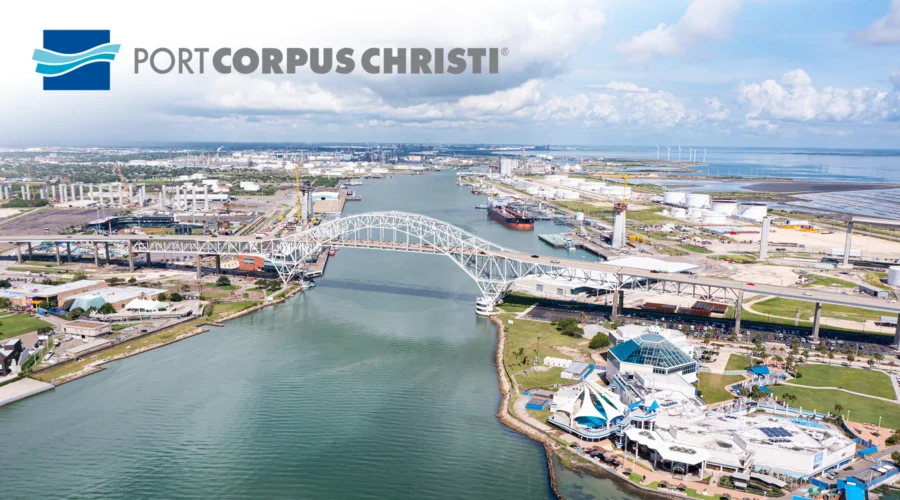
Managing one of many largest ports in america requires fixed coordination throughout advanced infrastructure, knowledge techniques, and bodily environments. The Port of Corpus Christi, the nation’s largest crude oil export hub and third-largest port by tonnage, handles excessive volumes of vessel site visitors, power commodities, and legislation enforcement operations day by day. Sustaining security and effectivity beneath these situations will depend on the power to make well timed, knowledgeable selections primarily based on correct and accessible data.
Previous to the introduction of its new spatial computing platform, the port relied on conventional management room setups, which concerned a number of screens displaying siloed functions. Info akin to vessel positioning, police dispatch knowledge, and environmental situations existed throughout separate techniques. This fragmented setup made it tough to kind a cohesive understanding of occasions in actual time, and operational consciousness typically relied on workers manually cross-referencing a number of instruments concurrently, in line with the port.
This created a specific problem for area personnel. Most of the port’s techniques weren’t designed to be used outdoors of a set management room and required entry to resource-intensive desktop environments. What the port actually wanted was simplicity within the type of a single place the place all this knowledge got here collectively clearly and rapidly, and a system that might take advanced operations and make them comprehensible at a look.
Why the Port of Corpus Christi Selected a Digital Twin for Actual-Time Operations
In response to this requirement, the Port of Corpus Christi started creating its personal digital twin platform. The purpose was to consolidate core operational knowledge right into a single 3D interface that might present an built-in spatial view of the port, up to date in actual time and accessible from the sphere. This marked the start of what would change into OPTICS: the General Port Tactical Info Pc System.
“The purpose was to create situational consciousness,” mentioned Darrell Keach, Enterprise Options Supervisor for the Port of Corpus Christi. “Proper now, it takes an individual switching between 5 or 6 totally different functions simply to piece all that data collectively.”
In response to the port, the concept was to not create a single-use answer, however to discover how a number of techniques that have been beforehand working in isolation might be mixed into one spatially clever setting.
Preliminary funding for the challenge was supplied by way of a U.S. Division of Homeland Safety grant, administered by the Coast Guard. This help enabled the port to experiment with no inflexible technical scope. Consequently, the staff adopted an exploratory strategy in defining what a digital twin ought to accomplish in a port setting. The purpose was not merely to construct a 3D mannequin, however to create a dwell operational system that mixed geospatial knowledge with legislation enforcement, maritime monitoring, and infrastructure layers.
The OPTICS system was developed with help from The Acceleration Agency (TAA), a digital twin platform supplier. Its major aims included streamlining data entry, bettering field-level situational consciousness, and lowering reliance on screen-heavy desktop setups for day-to-day operations. A key focus was enabling entry to related data throughout departments and places, not simply throughout the confines of a management room.
The platform was initially designed round three core knowledge sources: vessel monitoring; 3D port infrastructure; and the police division’s computer-aided dispatch (CAD) incident studies. Nonetheless, it was additionally meant to be expandable. From the outset, the port emphasised the necessity for a system that might develop as new operational necessities and knowledge sources emerged.
Why Spatial Computing and Recreation Engines Are Crucial for Correct Digital Twins
The event of OPTICS required a expertise stack able to integrating real-time spatial knowledge, high-fidelity 3D content material, and dwell operational inputs. In response to the Port of Corpus Christi, the choice to base the platform on a mixture of Esri’s ArcGIS tools and the Unity recreation engine was pushed by the necessity for each geographic accuracy and interactive efficiency.
The muse of OPTICS is constructed on the ArcGIS Maps SDK for Unity, which permits the mixing of GIS knowledge inside a real-time 3D rendering setting. The system incorporates dwell AIS vessel knowledge, incident feeds from the port’s police dispatch system, and Azure Occasion Hub for streaming extra real-time knowledge inputs. These parts are displayed in an interactive Unity-based entrance finish, permitting customers to navigate and interpret the port’s operational setting in 3D.
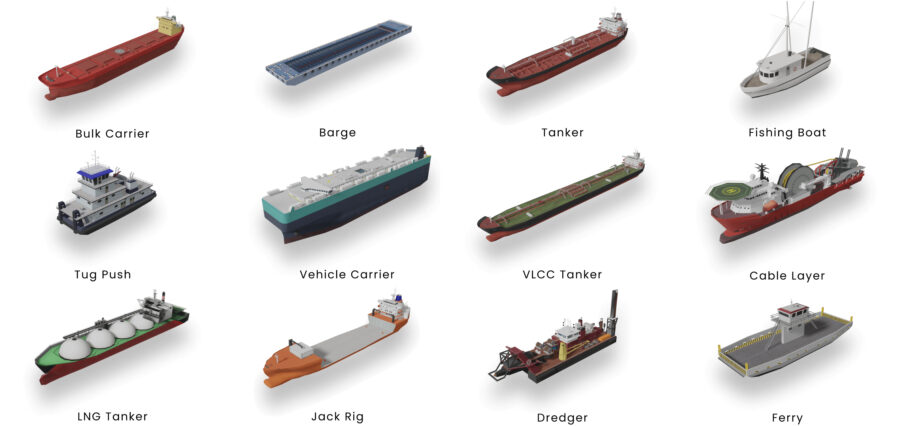
Scene Layer Package deal (SLPK) property, constructed utilizing ArcGIS, signify static infrastructure akin to buildings, docks, bridges, and storage tanks. These are preloaded into the appliance to make sure efficiency in offline or field-deployed eventualities. In parallel, vessels and autos are modeled as Unity objects to mirror dwell motion throughout the setting. The one exterior streaming requirement is for Esri’s basemap layers, which function a visible basis for the general spatial mannequin.
The platform itself is powered by Project Gemini, an ‘Energetic Digital Twin’ system developed by TAA. In response to TAA, Gemini is designed with a layered structure that permits the port to combine new techniques, sensors, and operational knowledge sources over time with out requiring vital adjustments to the platform’s core construction. This modular strategy has been key to supporting the evolving operational wants of the port whereas retaining the digital twin responsive and scalable.
How Actual-Time Spatial Intelligence Enhances Security and Effectivity at Ports
The primary operational deployment of OPTICS integrates three major knowledge sources: a 3D geospatial base constructed on Esri’s ArcGIS platform; real-time vessel monitoring by way of Computerized Identification System (AIS); and incident knowledge from the port’s police computer-aided dispatch (CAD) system. This mix supplies a complete, spatially conscious operational view that’s up to date repeatedly and accessible within the area.
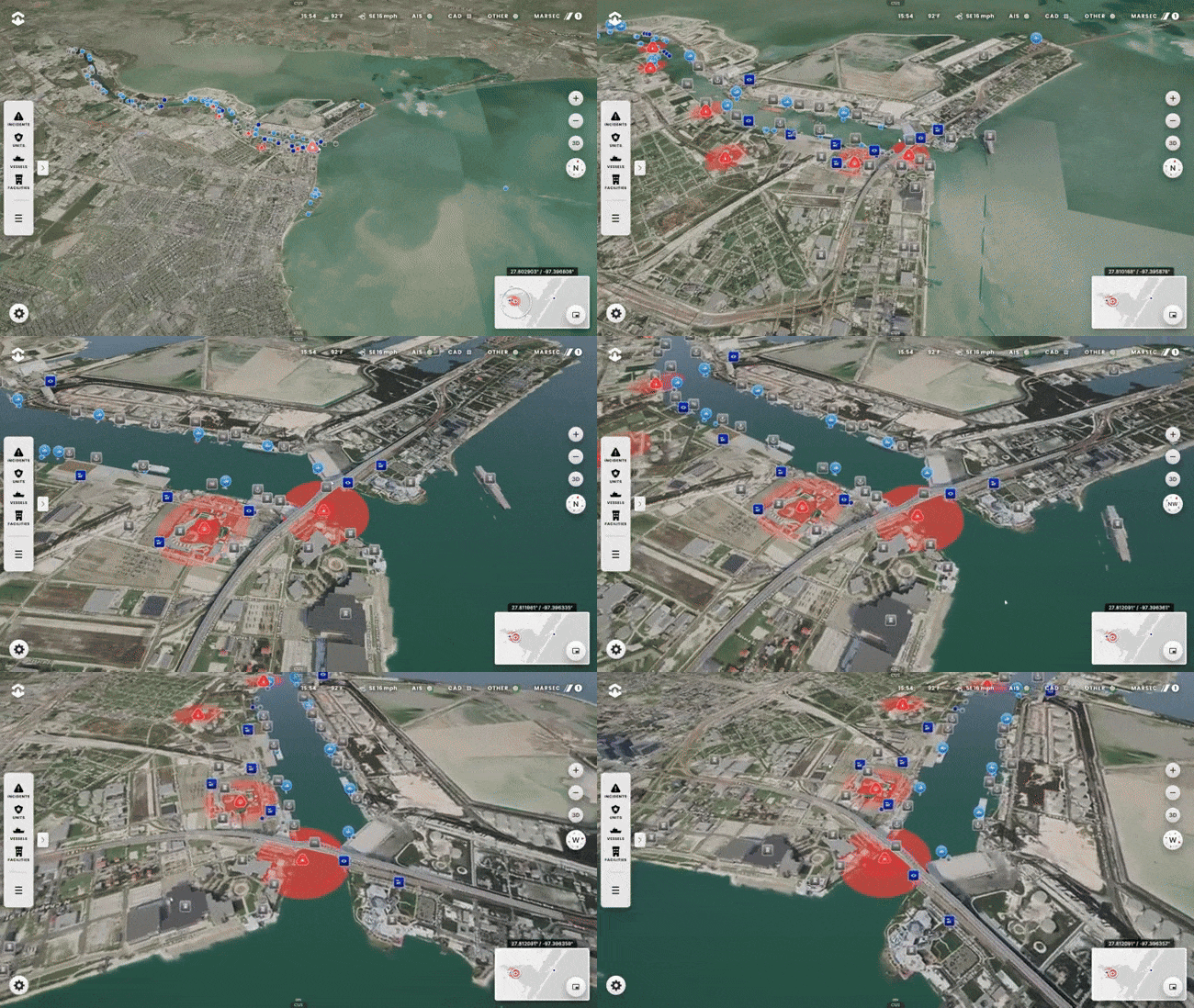
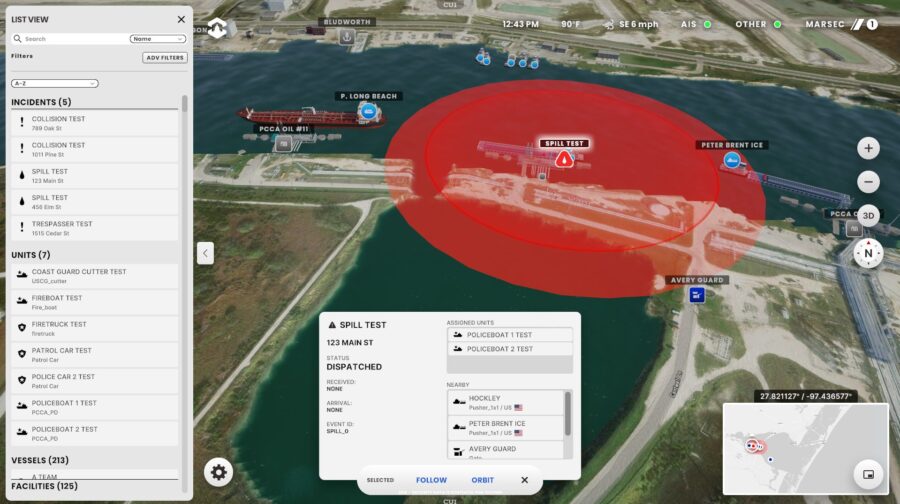
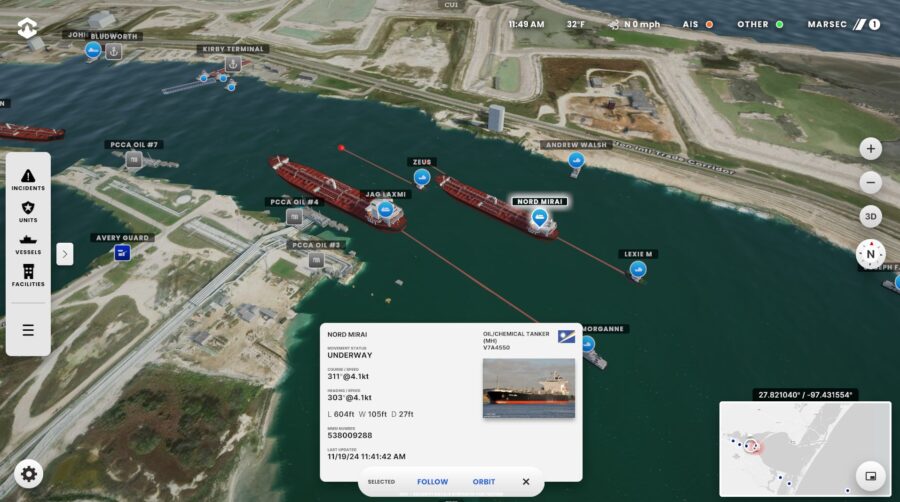
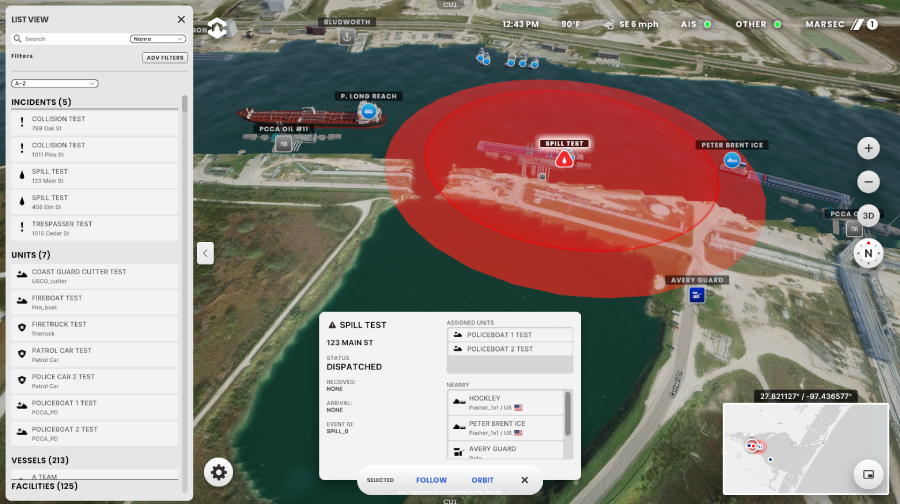
OPTICS shows vessel places, predicted motion paths, incident radii, and close by property inside a unified 3D interface. These options are geo-referenced in actual time, permitting dispatchers and officers to evaluate conditions from each a strategic and ground-level perspective. The system additionally helps influence evaluation for occasions akin to chemical spills or safety incidents, serving to customers perceive what property or vessels could also be affected inside a given vary.
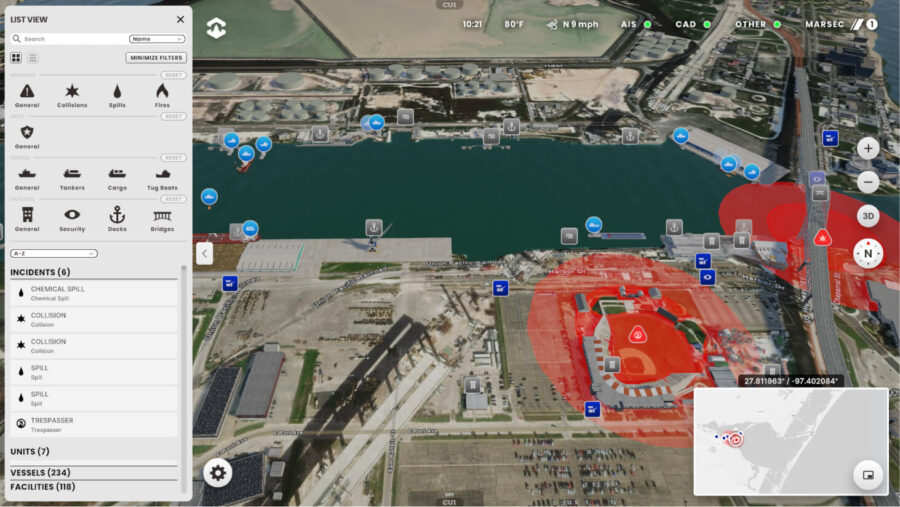
“With the ability to see the place these vessels are in a 3D setting didn’t exist earlier than we created OPTICS,” mentioned Keach.
One of many key operational enhancements, in line with the port, is that area officers can now entry this data immediately by way of an iOS utility. This replaces the necessity for devoted desktop setups or management room entry and permits for sooner, extra knowledgeable responses throughout time-sensitive occasions.
“We will now get all of this data to an officer within the area in a single display screen. Earlier than OPTICS, that simply was not potential,” Keach added.
The port famous a number of use instances which have already demonstrated worth. These embody viewing spill response zones linked to CAD incident knowledge, figuring out which vessels are inside a risk radius, and managing ferry operations utilizing predicted vessel paths. Moreover, the system consists of the power to simulate line-of-sight views from future infrastructure, akin to bridge building websites, serving to planners anticipate new safety or visibility issues.
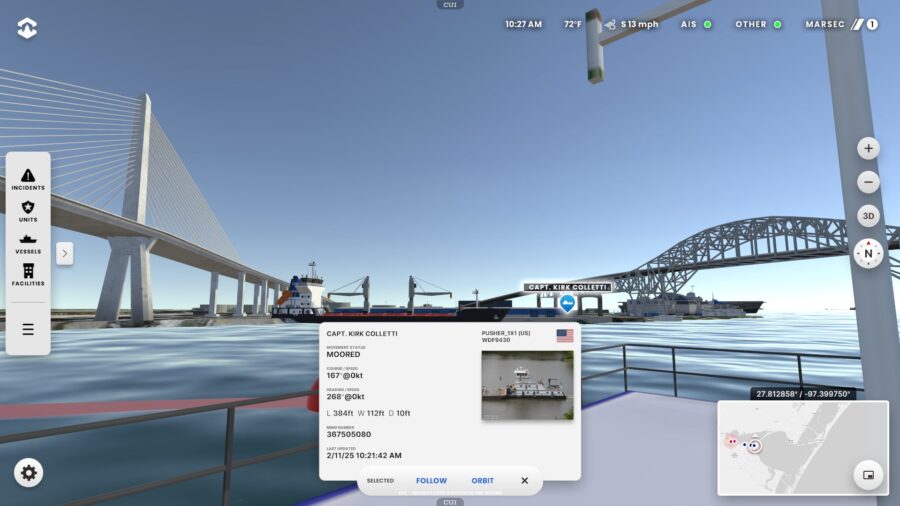
One other characteristic permits customers to just about “board” a ship in actual time by switching to its perspective throughout the interface. This attitude aids each situational consciousness and coaching, enabling workers to raised perceive what can and can’t be seen from the bridge of a shifting vessel. Utilized in mixture, these spatial computing instruments present clearer operational context for each planning and response.
Key Classes for Constructing Correct Digital Twins in Complicated Environments
Whereas OPTICS has delivered operational advantages, the Port of Corpus Christi encountered a number of challenges throughout its improvement, a few of which spotlight key issues for future digital twin initiatives.
One of many earliest difficulties concerned establishing a transparent, shared imaginative and prescient throughout stakeholders. In response to the port, people engaged on the challenge initially held totally different assumptions about what the digital twin ought to obtain. Some prioritized visible illustration, whereas others have been centered on operational utility. Aligning these expectations was important to making sure that the ultimate system served real-world use instances fairly than remaining a conceptual or overly generic platform.
Technical accuracy additionally proved to be a key hurdle, significantly in relation to how water options have been represented throughout the 3D setting. The port famous that satellite tv for pc imagery often launched visible artifacts, together with “ghost vessels” that not existed however had been captured in previous imagery. As well as, defining exact shoreline boundaries was difficult by components akin to tides, dredging operations, and ongoing building. These components made it tough to persistently signify real-time waterfront situations with out additional spatial refinement.
One other limitation early within the construct course of was the absence of bathymetric knowledge. With out detailed details about underwater terrain, the system lacked the depth context wanted to simulate incidents like vessel groundings or to tell navigational constraints under the floor. Addressing this required new knowledge integrations and changes to the spatial logic utilized by the platform.
These challenges underscored the significance of domain-specific accuracy in digital twin environments, the place attaining operational worth required greater than visible realism. It additionally relied on spatial constancy, iterative testing, and a willingness to calibrate the mannequin primarily based on sensible suggestions.
Subsequent Steps for OPTICS: Integrating Cameras, AI, and Expanded GIS Knowledge
With the core OPTICS platform now operational, the Port of Corpus Christi has outlined a number of areas for growth geared toward deepening situational consciousness and rising automation. In response to the port, the subsequent part of improvement goals to include new knowledge layers, machine studying capabilities, and real-time video integration to additional improve decision-making and security.
One of many key deliberate additions is the mixing of dwell safety digicam feeds. These will embody auto-slewing capabilities, permitting the system to mechanically floor probably the most related digicam views in relation to an lively incident. At the moment, dispatchers should manually determine which digicam to watch, however the port expects this replace to cut back that burden by intelligently prioritizing viewpoints primarily based on spatial relevance and potential line-of-sight.
One other deliberate addition is real-time car telemetry from Samsara, the telematics platform used to watch the port’s fleet. Integrating this knowledge will give operators a clearer view of area exercise, enhance coordination throughout time-sensitive occasions, and help higher logistics and faster response instances in emergencies.
Esri-based GIS analyses are additionally anticipated to play a better position in future variations of OPTICS. The port is making ready so as to add extra spatial knowledge layers and predictive instruments, together with using machine studying to anticipate vessel conflicts or route inefficiencies earlier than they happen.
“Esri’s complete GIS platform supplies the muse for integrating extra operational infrastructure, terrain knowledge, and imagery—enhancing their lively digital twin with deeper spatial intelligence,” mentioned Rex Hansen, Principal Product Supervisor for the ArcGIS Maps SDKs for Native Apps and ArcGIS Maps SDKs for Recreation Engines.
“This basis will help superior spatial evaluation to know relationships and impacts, akin to figuring out infrastructure affected by street closures or utility disruptions. It’s going to additionally allow optimized motion of personnel and supplies to cut back prices and improve security, in addition to predictive evaluation to anticipate and stop potential points—akin to avoiding vessel collisions or figuring out high-risk areas for sediment buildup which will require extra frequent dredging.”
Along with enhancing day-to-day operations, the platform is being positioned to help coaching and emergency preparedness. Deliberate options will apparently embody simulated hearth occasions and evacuation path testing. Wind drift modeling for gasoline or vapor launch eventualities can also be on the roadmap, serving to workers assess security zones and containment methods prematurely.
Increasing Use Circumstances and Broader Purposes
Trying forward, Keach outlined potential future use instances for the OPTICS platform: “We may simulate fires in buildings, and what that does to an egress plan. This can permit numerous state of affairs planning that perhaps isn’t even potential in the true world.”
In whole, the port has recognized greater than 70 potential datasets for future integration. These embody asset administration information, environmental sensor inputs, and communication system overlays. As every layer is added, the digital twin is predicted to evolve from a situational interface right into a extra complete operational platform that adapts to altering wants whereas persevering with to serve real-world outcomes.
Though OPTICS was developed particularly for maritime operations, the Port of Corpus Christi emphasised that the platform was not designed to be port-specific. Constructed utilizing open requirements and APIs, the underlying structure might be tailored to be used in different public infrastructure contexts, together with airports, utilities, municipalities, and transportation networks.
The system’s modular design permits different organizations to combine their very own datasets and functions into the same spatial computing framework. This implies a metropolis may undertake the identical structure to watch street networks and emergency providers, or an power supplier may apply it to handle distributed property throughout a regional grid, in line with the port and its companions.
Spatial Techniques as a Basis for Operational Intelligence
The Port of Corpus Christi’s expertise with OPTICS illustrates how digital twins can function dwell operational instruments, not simply static planning fashions. By combining geospatial accuracy with real-time inputs from a number of knowledge sources, the platform delivers sensible advantages that reach past visualization. These embody bettering cross-departmental coordination, lowering response instances, and enabling cellular entry to operational insights.
For different public sector entities evaluating how you can leverage spatial computing, OPTICS demonstrates a transparent pathway for turning current GIS and IoT investments into actionable intelligence. Relatively than treating 3D fashions as standalone property, the port has proven how digital twins can perform as on a regular basis infrastructure that’s layered, extensible, and constructed to evolve alongside operational necessities.
Picture credit score: Port of Corpus Christi / The Acceleration Company (TAA)

Sam is the Founder and Managing Editor of Auganix. With a background in analysis and report writing, he has been overlaying XR trade information for the previous seven years.